An Update on Varda after W-2
Reflections on Two Early Successes and a Look Towards the Future

Varda Space Industries was founded four years ago with a clear mission, “expand the economic bounds of humankind,” based on two core facts:
- Decades of work from the ISS and other human-rated, government-built platforms have shown the potential for microgravity materials processing, specifically high-value pharmaceuticals.
- Orbital rockets are growing exponentially in flight cadence and availability.
The deduction from these facts was that now, for the first time in human history, a commercially self-sustaining orbital economy is within reach. The missing link between a stagnant in-space ecosystem and a thriving one was an affordable orbital platform and reentry capability—something we immediately set out to build.
The more often we fly, the more quickly in-space manufacturing becomes just another link in the global supply chain.
We imagined that this vehicle architecture would be low-cost, autonomous, and high cadence, instead of a complex, large, singular station. This mode of operating would not only take advantage of advances in the launch market, and lower costs overall, but also clearly echo the operating cadence of the most advanced material science laboratories on Earth.
Now, four years later, Varda has completed its first two spaceflights with back-to-back successes, with a third in space now preparing to return to Earth. Each of these flights hosts several customers onboard.
These early successes give us confidence that it’s time to scale. To us, that means scaling cadence—the more often we fly, the more quickly in-space manufacturing becomes just another link in the global supply chain.
A Universal Vehicle for Any Payload
As we’ve built the Varda W-Series vehicle, we’ve come to recognize that its capabilities are relevant to many use cases. As an example, on our recent W-2 mission, we carried three very different payloads that served three very different customers:
- Varda’s pharma team flew upgraded crystallization hardware, demonstrating process control through launch, the creation of unique microgravity crystallizations, and held thermal control during reentry.
- NASA flew an ablative heat shield sample to test advanced thermal protection systems.
- Government partners flew instrumentation to capture high-fidelity data during hypersonic reentry.
Cadence is the North Star
Those three payloads from our second mission show the universal applicability of a low-cost, high-cadence reentry vehicle to support a diverse set of customers:
- Pharma manufacturing using our in-house, IP-generating hardware stack
- Defense testing of high-speed systems in true hypersonic conditions
- Microgravity R&D for scientists during a transitional period in LEO access
We've shown that Varda can best serve our partners by flying our current vehicle as frequently as demand necessitates.
For our pharmaceutical customers, increased cadence means we are able to more closely match drug development timelines. For defense customers, it allows for faster iteration between tests. And for microgravity researchers, we can offer a faster turnaround time between the design of an experiment and receiving data to iterate on.
Varda's Core Business: Unlocking Microgravity for Pharmaceutical Formulation
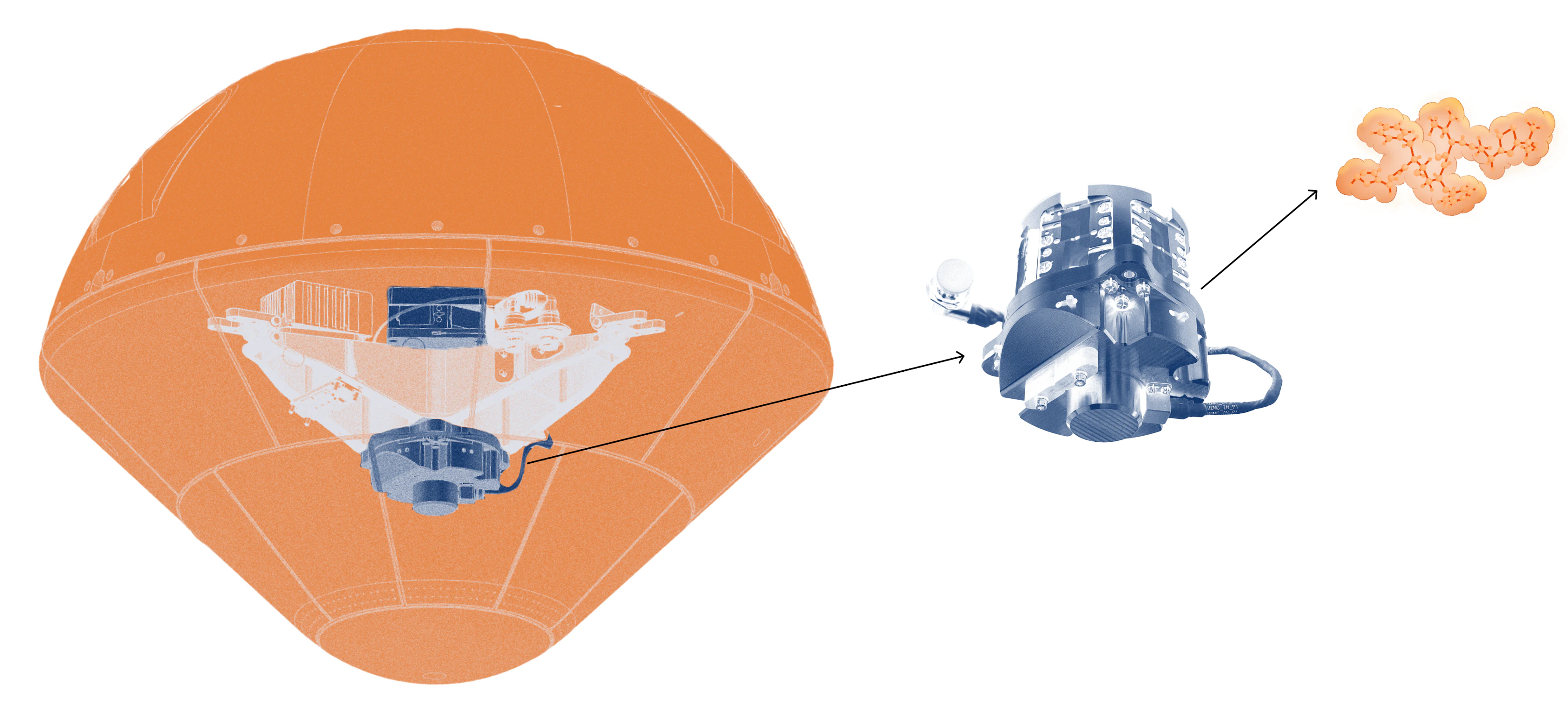
The idea that microgravity can significantly impact pharmaceutical crystallization is not novel. It’s an idea that has been around for decades, with strong experimental proof points.
Still, the use of microgravity in the terrestrial drug development pipeline has not yet been translated into the clinic because of a lack of regular access to LEO and limited availability of commercial industry-grade microgravity hardware. Varda aims to tackle both challenges.
At Varda, we are building everything in-house: from screening the gravity-sensitivity of molecules, to the microgravity processing hardware, to the space vehicles themselves. Our partners come to us with an asset that has formulation challenges, we deliver back an improved formulation.
Our initial focus area is on difficult-to-crystallize small molecules. Crystallizing these drugs in microgravity can lead to better purity, new molecular structures, and more uniform particle size. Once produced in microgravity, these effects are locked in for return and use on Earth, where they can have dramatic impacts on drug performance and patient care.
The W-1 and W-2 missions successfully demonstrated these capabilities. We validated new hardware configurations, confirmed critical environmental controls, and began the early stages of repeatable crystal growth procedures. These are crucial building blocks on the path to economically viable orbital manufacturing.
In the years ahead, we will scale up both the throughput and complexity of our pharma payloads as we build toward commercial production before moving into the clinic with our partners.
Varda’s Hypersonic Testbed: Rapid, Real-World Testing for National Security at Mach 25
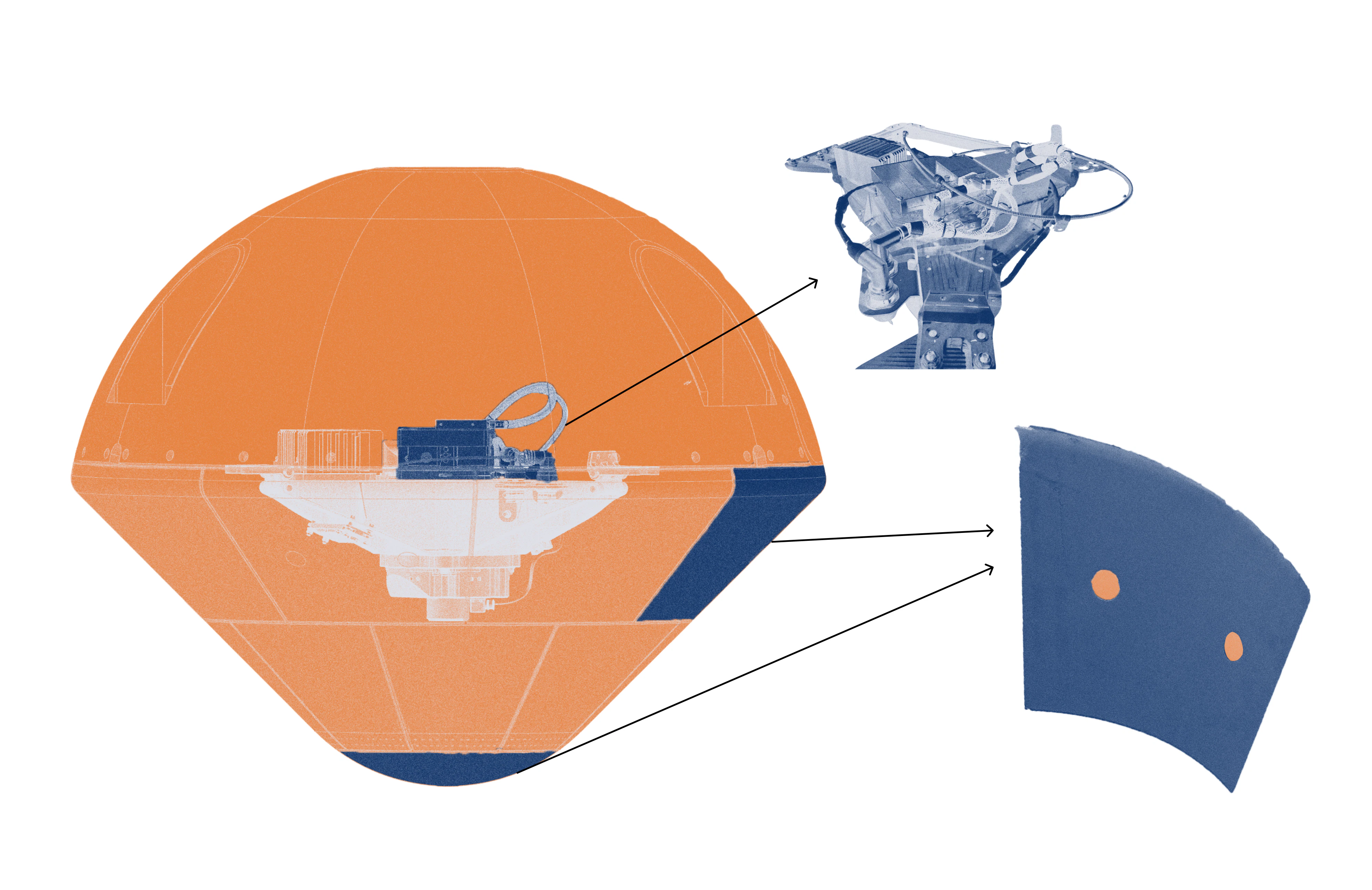
The same vehicle that grows next-generation pharmaceutical compounds can also serve as the world’s most cost-effective hypersonic testbed.
Varda offers the lowest-cost, highest-cadence vehicle for in-flight testing of high-speed systems. In short, it’s the least expensive way to go Mach 25, and for our defense partners, this unlocks a previously unaffordable mode of development:
You can’t analyze your way to the future — you must fly into it.
- Fly and validate a variety of subsystems through reentry environments with unique aero-thermal-chemical properties that are not yet well understood.
- Evaluate new materials and coatings to advance the next generation of hypersonic vehicles.
Simulations have their place, but real systems need real data. Varda’s vehicles, flying at high cadence, provide that data early and often.
Because of its rapid turnaround and simple recoverability, our flight data is now informing design cycles of hypersonic defense programs, advanced NASA materials, and even future planetary mission concepts. When we say that reentry testbeds are critical to the next generation of defense systems, this is exactly what we mean: you can’t analyze your way to the future—you must fly into it.
Varda's Support of Microgravity Science: A Force-Multiplying, Affordable R&D Complement to Human Stations
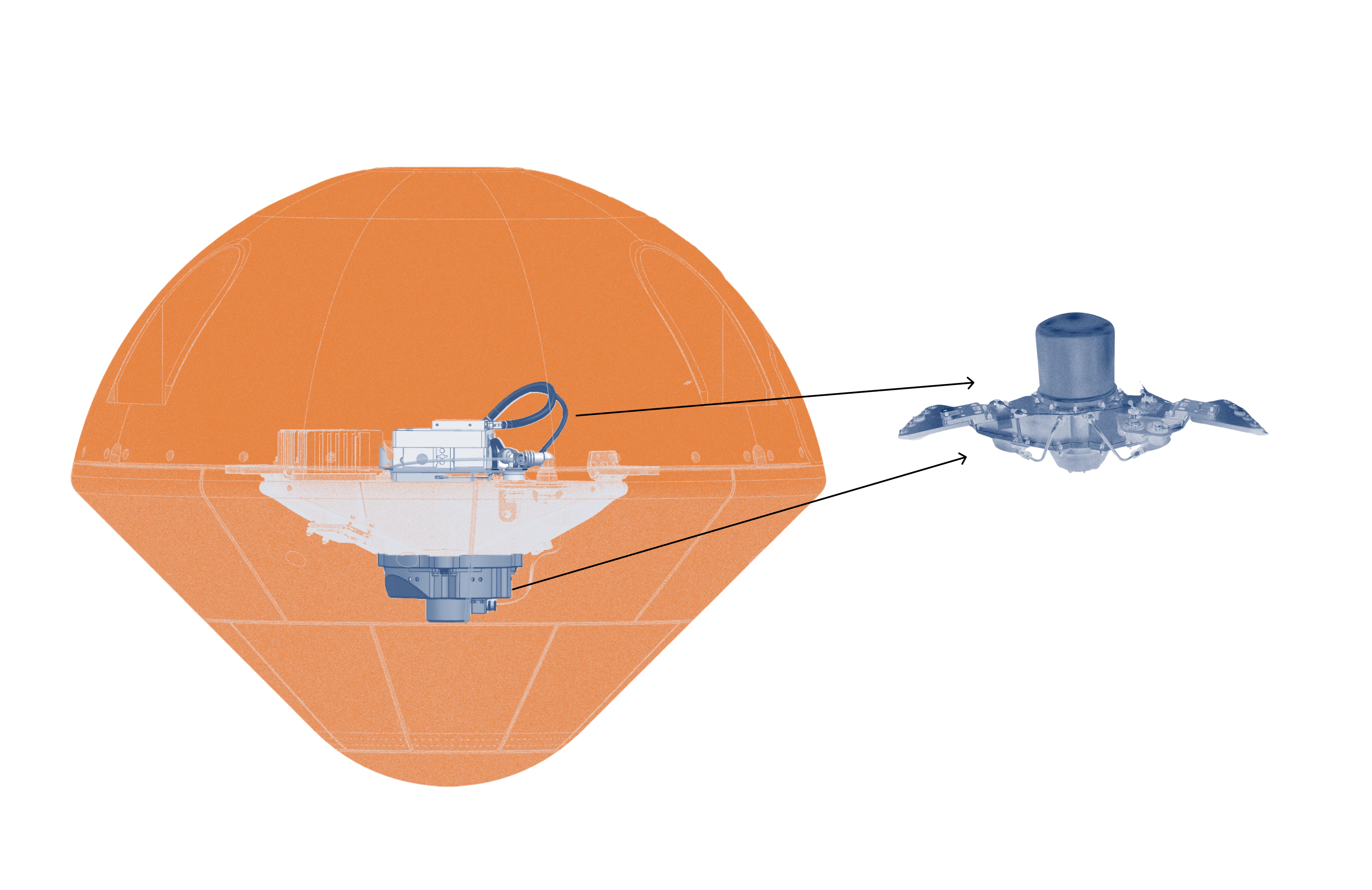
Orbital research and production will be most efficient when a diversity of platforms—including autonomous vehicles—are enabled.
As the ISS ages and commercial space stations slowly come online, the U.S. is entering a transitional period in crewed orbital infrastructure. Varda is not a competitor to crewed platforms. We are a force multiplier.
- Given the complexity of human-rated stations, relying solely on humans to produce work that can be done by automation will result in significant overspending and ultimately a capability gap when the ISS is decommissioned—all while new CLDs (Commercial LEO Destinations) are not yet online.
- Taking astronauts out of the loop is the most efficient way to get this research from orbit to help people on Earth. Our capsules offer capabilities beyond human stations: they can scale infinitely and quickly by flying more frequently, provide greater operational flexibility, and easily handle toxic chemicals and high-temperature materials processing.
- Varda closes the loop on the basic research done on human stations. Without an economically rational off-ramp to commercialization, there is no ROI to that microgravity bench work. Similarly, Varda is symbiotically reliant on the basic bench work done on human stations for the future use-cases we commercialize.
For the U.S. to maintain regular, routine operations in space, funding must be made available for autonomous infrastructure to rapidly experiment. Together, autonomous vehicles and human stations will define a resilient LEO economy in the decades to come.
Cadence is the Revolutionary Enabler. And It’s Accelerating.
Renders and words are cheap. Flying regularly and delivering on what we promised is what truly matters.
We’re building the infrastructure that will become the backbone of orbital industry.
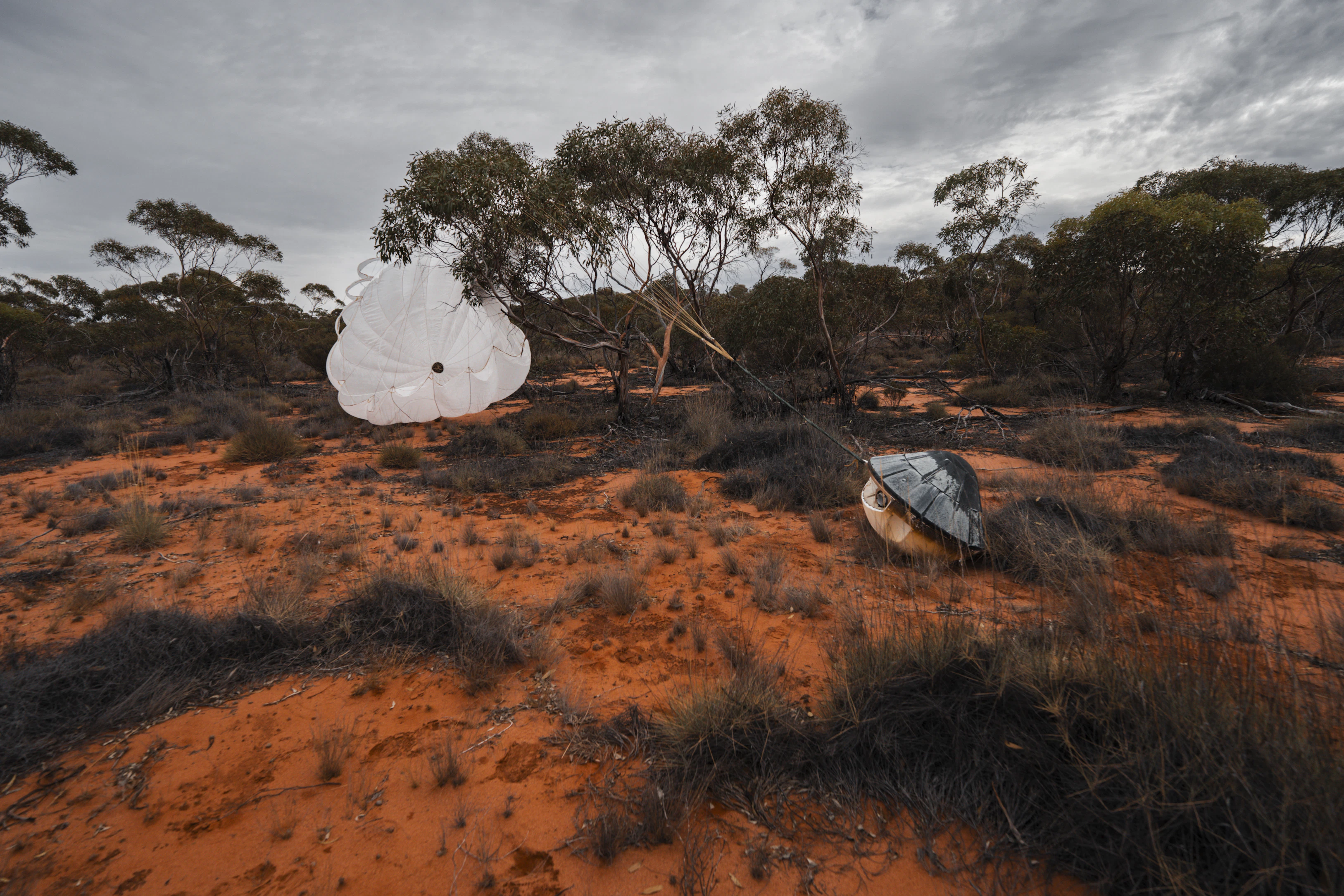
Varda has already flown two orbital missions and returned both vehicles safely to Earth. Our third mission will return soon.
Varda has found solid footing with customers across commercial and government sectors, and our momentum across all these use cases is growing.
Regular reentry is no longer a theoretical capability. We’re doing it. We’re building the infrastructure that will become the backbone of orbital industry. The orbital economy is coming into focus. Varda has already started building it, one flight at a time.
Media inquiries: Alex Pearlman, media@varda.com