W-5
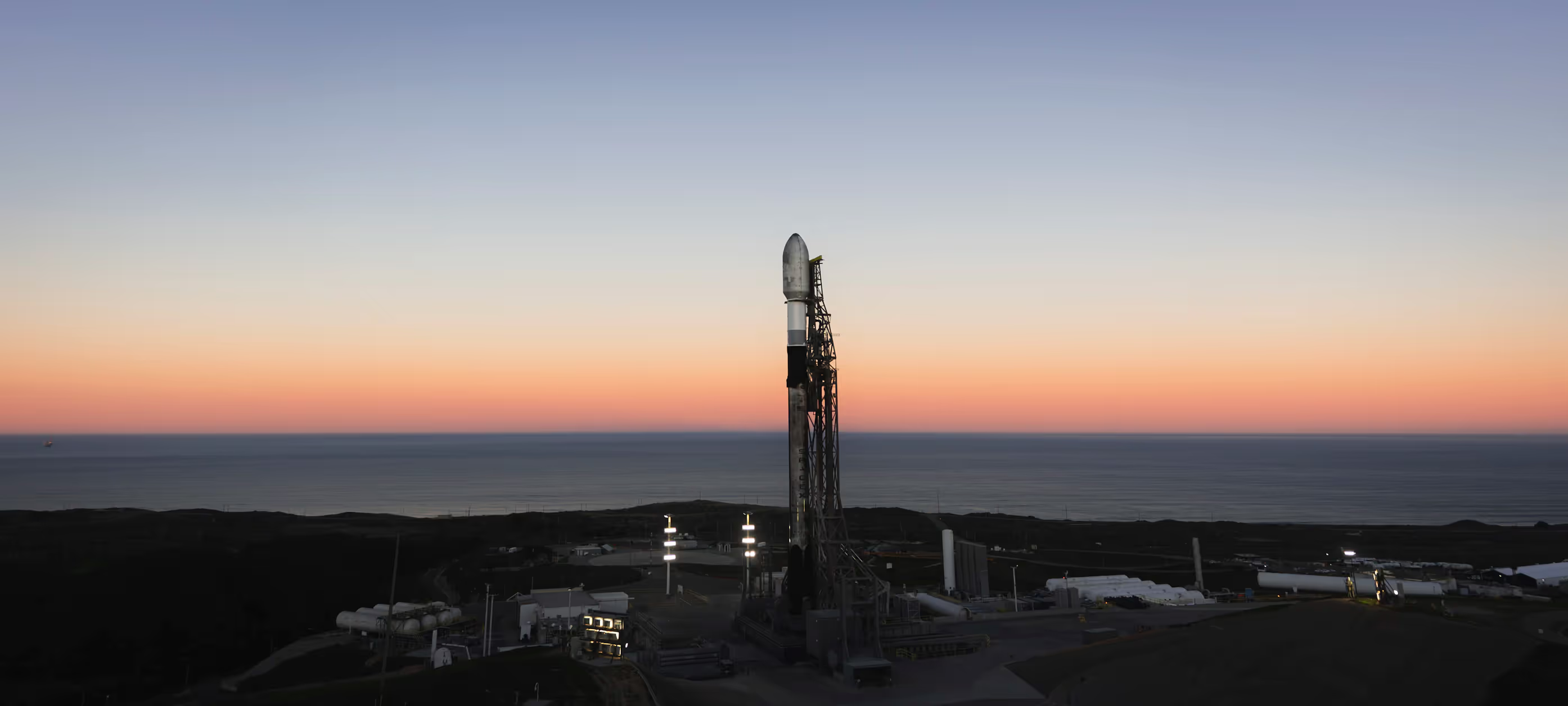
W-5 launched on SpaceX's Transporter-15 mission on November 28, 2025 and reentered at 6:07 AM Pacific time on January 29, 2026. This mission was the company's fifth mission overall and fourth reentry.
The W-5 capsule carried a specialized payload for the U.S. Navy focusing on data collection during reentry. Varda’s ability to provide fixed-cost, routine reentry offers a unique, cost-effective platform for iterative testing of hypersonic flight characteristics.
The W-5 mission was the first reentry of Varda’s next-generation satellite bus, designed specifically to meet the rigorous demands of both orbital pharmaceutical processing and high-velocity reentry.
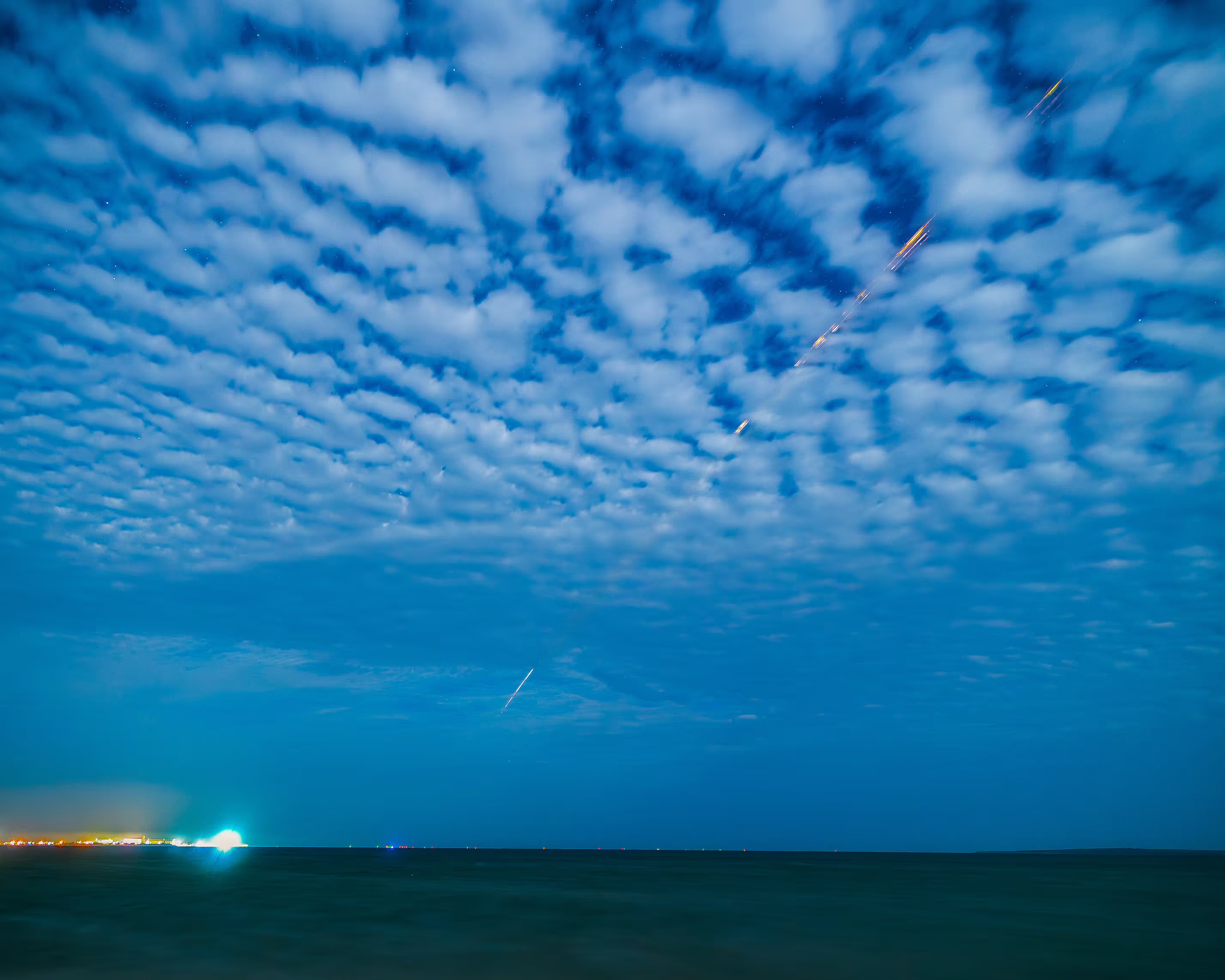
The vehicle was also equipped with an in-house manufactured heatshield, made in Varda’s El Segundo headquarters from C-PICA (Conformal Phenolic Impregnated Carbon Ablator). Originally developed at NASA's Ames Research Center in Silicon Valley, CA, C-PICA is an ablative material that has been used on all the W-series capsules. NASA supported C-PICA’s commercialization via a Tipping Point award.
"Heat shields allow us to bring the benefits of work done in space, including medical research, technology development, and scientific discovery, down to Earth to improve our everyday lives," said Greg Stover, Associate Administrator (Acting), Space Technology Mission Directorate in a NASA blog post about the mission.
“W-5 reinforces the advantage of building the integrated system in-house,” said Nick Cialdella, Chief Technology Officer of Varda Space Industries. “By owning the spacecraft, the capsule, and the mission operations end-to-end, we can iterate faster, fly more often, and reliably bring complex manufacturing processes back to Earth.”
Key highlights of the W-5 mission include:
- End-to-End Autonomy: The mission was a successful demonstration of the Varda-built bus in maintaining orbital stability and executing orbital maneuvers, concluding in a precise deorbit burn.
- High-Fidelity Recovery: Precise landing and rapid recovery of the customer payload for immediate post-flight analysis saves time and offers customers options for iterative development.
- Hypersonic S&T: The unique aerothermal chemistry of the reentry environment is impossible to fully simulate or replicate on the ground, and flight testing is the best way to advance comprehensive understanding of the reentry environment.

Dual-use flights leveraging commercial entities like Varda provide the reentry test community with a novel, low-cost approach to iterative hypersonic science and technology experimentation. The unique aerothermal chemistry of the reentry environment is impossible to fully simulate or replicate on the ground, and flight testing is the best way to advance comprehensive understanding of the reentry environment.
Varda's W-series hypersonic reentry capsule is the lowest cost, most rapid, recoverable option to reproduce the most challenging hypersonic and reentry flight environments. Varda's capsule enters the atmosphere at 18,000 miles per hour and hits Mach 25+ on every mission before landing by parachute on Earth.
"With W-5, AFRL and Varda again demonstrated that hypersonic flight testing can be done routinely and affordably," said Brandi Sippel, Vice President of Mission Management at Varda Space Industries. "Each Prometheus mission helps expand access to the reentry environment, accelerating the science and engineering that define the future of hypersonic systems."