W-7
Varda is sending a promising new type of cancer medicine known as a PROTAC into space to see whether microgravity can help overcome one of its biggest limitations: poor crystallinity.
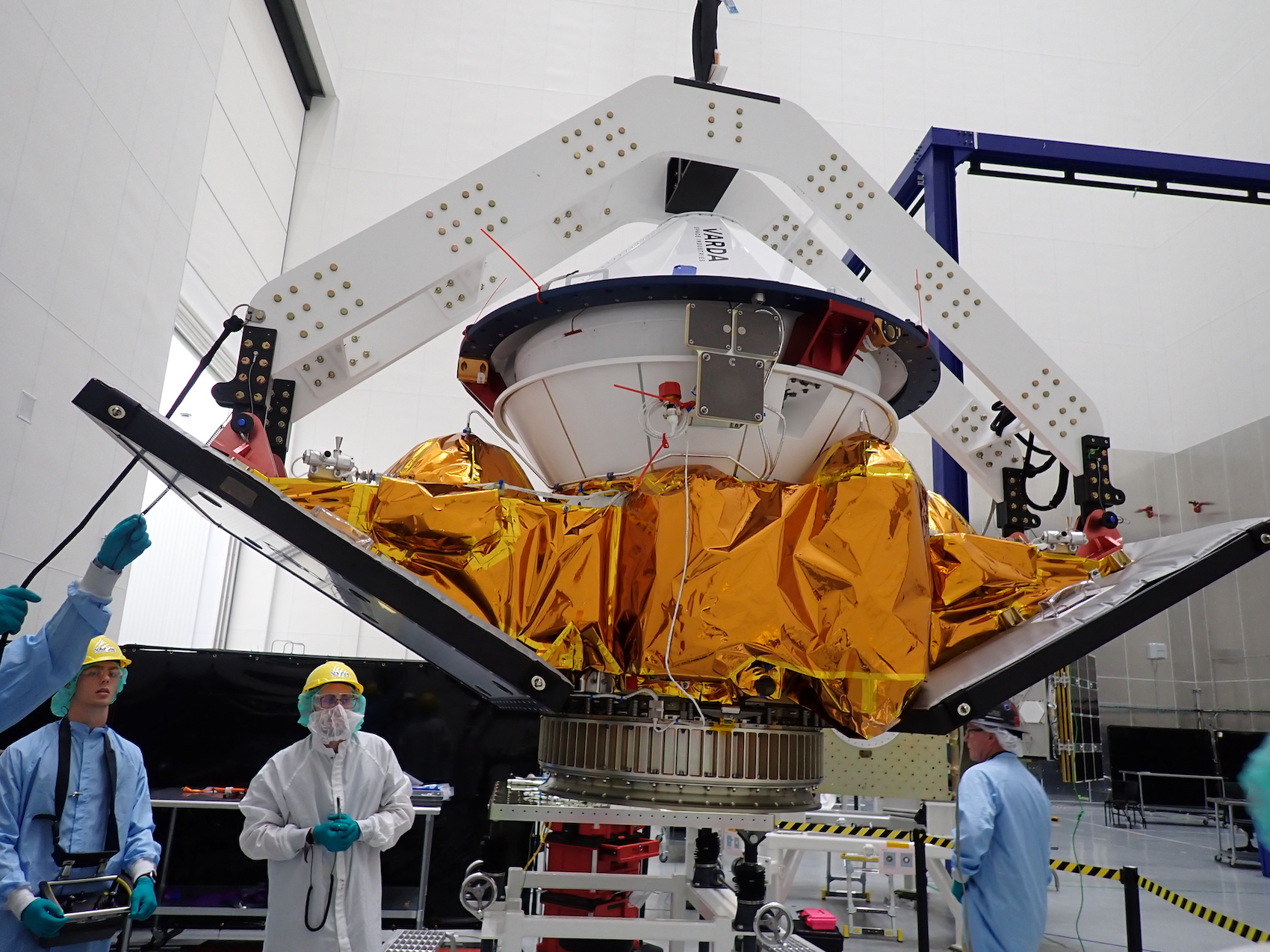
PROTACs are designed to hijack the cell’s natural recycling machinery, tagging disease-causing proteins for destruction rather than simply blocking them. But these sophisticated molecules are often large and difficult to formulate into medicines the body can absorb effectively. Poor and non-uniform crystallinity limits formulation and manufacturability of APIs as the degree of crystallinity impacts predictability and repeatability in both dissolution and downstream manufacturing.
In microgravity, molecules can crystallize differently than they do on Earth, potentially producing crystal forms with improved properties, including crystallizing drugs that otherwise cannot be fully crystalline via terrestrial methods. . If successful, the experiment could produce a crystalline form of the API that could enable formulations otherwise inaccessible terrestrially.
If Varda's W-7 mission demonstrates that microgravity can yield PROTAC crystal forms, it could open a path toward clinical development for an entire class of compounds that remain difficult to formulate.
"The most sophisticated molecule in the world doesn't help a patient if it can't be absorbed by the body," said Michael Reilly, Chief Strategy Officer at Varda Space Industries. "Varda is finding new ways to make powerful medicines work better for the people who need them. With W-7, we're testing unique physics of microgravity in pursuit of solving a formulation problem that limits an entire class of cancer drugs."
By treating low Earth orbit as manufacturing platform available on a routine basis, Varda is enabling the development of the first drug made in space to benefit patients on Earth.