W-9
"For in-space manufacturing to be a real industry, we need to operate like one: high cadence, low cost per mission, and systems that don't need a human in the loop for every decision,” said Wendy Shimata, VP of Autonomous Systems at Varda. “We talk a lot about making reentry go from novel to normal. Flying two vehicles on the same launch vehicle is exactly that kind of normalization.”
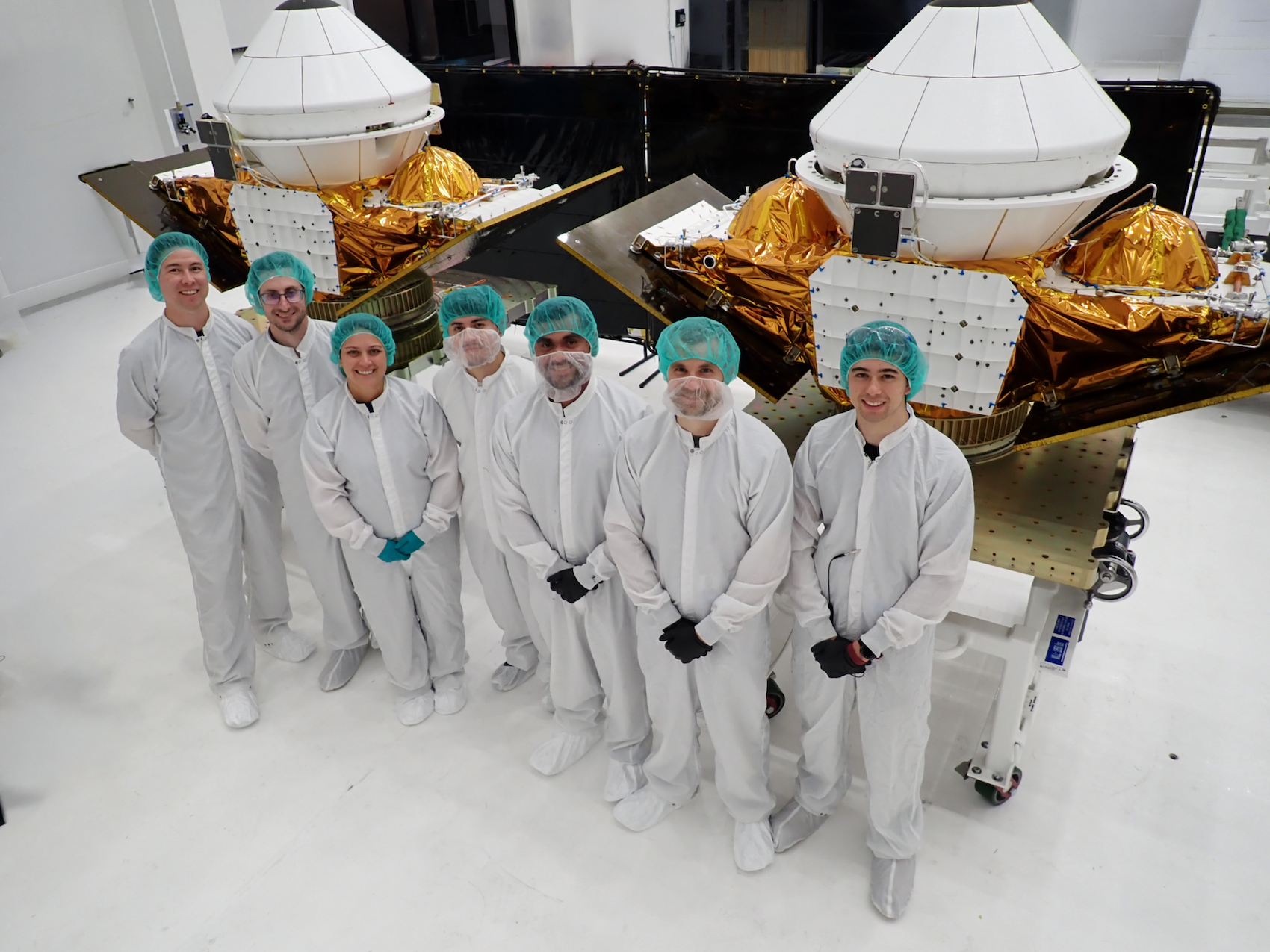
Both Vehicles Host Payloads from Government and Industry Partners
Both W-8 and W-9 carry a diverse payload manifest spanning commercial and government customers. Flying subsystems and materials through real hypersonic reentry conditions provides researchers important data that cannot be replicated on the ground.
- W-8's interior payload is provided by Canopy Aerospace & Defense, a global provider of advanced thermal protection systems and signal attenuation materials. Canopy’s Smart TPS-F payload monitors the condition of a spacecraft’s heat shield during reentry using advanced fiber-optic sensors to measure temperature, heat flux, and recession.
- W-8's exterior surfaces host next-generation thermal protection materials funded through two partners: a government program that funds hypersonic testing, and the Air Force Research Laboratory (AFRL), which funds payloads through the Prometheus program, a partnership between AFRL and commercial reentry testbed providers.
- W-9's interior payload is a navigation system designed to collect data during hypersonic flight and is also funded through a government program.
- W-9's exterior also hosts advanced heatshield materials from Syensqo. The nose tile is embedded with small samples of next-generation composite materials being developed to advance ablative technologies.
The Next Phase of Routine Reentry
“Launching W-8 and W-9 together is a turning point for us. Varda has been building toward the ability to launch, operate, and return multiple vehicles at once since W-1,” said Brandi Sippel, VP of Mission Management. “The number of annual launches and reentries will only increase from here.”
The ability to build, launch, operate, and return multiple vehicles at once is foundational to Varda's long-term business. More vehicles on orbit means more frequent returns, more data per mission, and a more resilient pipeline for bringing products home.